
Launch of the New EcoPhi Platform – Modular, Flexible and Manufacturer-Independent
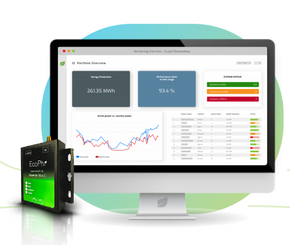
The EcoPhi platform has been fully redesigned and restructured. This release represents a fundamental architectural update rather than an incremental iteration, with the goal of improving usability, extensibility and long-term scalability across diverse energy system environments.
A key focus of the new platform is improved visualisation, navigation and user guidance. Data views, system states and control options have been reworked to provide clearer context and reduce complexity for users managing heterogeneous energy systems. The revised navigation structure supports faster access to relevant functions and a more consistent workflow across monitoring, analysis and control features.
From a technical perspective, the new platform establishes a solid foundation for manufacturer-independent integration of components. Devices such as inverters, battery systems, meters and controllers can be connected in a flexible and consistent way, independent of vendor-specific implementations. This enables the platform to support mixed system architectures while maintaining a unified EMS logic.
The underlying modular platform structure allows new features and functional modules to be added more efficiently than before. This applies both to internal platform development and to the integration of additional system capabilities over time. As a result, new use cases, control strategies and extensions can be introduced with significantly reduced implementation effort.
In parallel, the platform offers expanded configuration options for users, enabling more precise adaptation to site-specific requirements, operating conditions and project constraints. Users can adjust system behaviour and control parameters in a structured manner, supporting flexible deployment across different applications and markets.
With this release, the EcoPhi platform provides a modern and intuitive technical baseline for energy management applications that require adaptability, interoperability and long-term extensibility.